
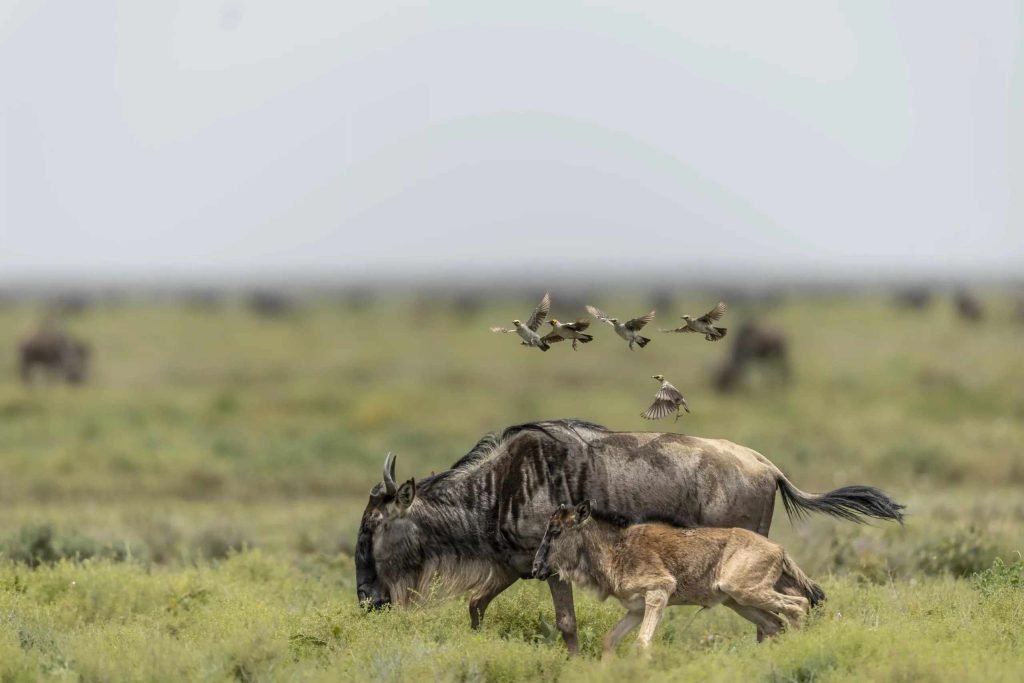
If you’ve ever dreamed of witnessing one of nature’s most extraordinary spectacles, wildebeest calving season in Tanzania should be at the top of your bucket list.
Each year, the Serengeti becomes a stage for an epic drama of life, survival, and renewal — as hundreds of thousands of wildebeest give birth to the next generation on the open plains.
This is not just a wildlife event; it’s a photographer’s dream, a safari adventure like no other, and a profound connection to nature’s rhythms.
In this guide, you’ll discover everything about wildebeest calving season: the best time to visit, what to expect, why it’s so special, and how to plan your safari to witness it in all its glory.
Tanzania’s Great Migration is one of the most iconic wildlife phenomena on Earth. Over 1.5 million wildebeest, along with zebras and gazelles, travel in a massive loop through the Serengeti and into Kenya’s Maasai Mara, following seasonal rains and fresh grazing lands.
| Migration Phase | Approximate Months | Location in Serengeti |
|---|---|---|
| Calving Season | January – March | Southern Serengeti (Ndutu and Serengeti South) |
| Greener Pastures | April – May | Western corridor as rains shift |
| River Crossings | July – October | Northern Serengeti & Mara River |
| Dry Season Gathering | November – December | Central Serengeti plains |
The calving season is widely regarded as one of the most remarkable moments in this migration cycle.
Wildebeest calving season typically occurs from mid-January to early March, depending on rainfall patterns.
During this period:
Approximately 500,000 wildebeest give birth in just a few weeks.
Plains come alive with the energy of newborn calves and vigilant mothers.
Predators such as lions, cheetahs, hyenas, and crocodiles are drawn to the area, creating intense wildlife action.
Why It’s Fascinating:
The calving season is a perfect example of nature’s balance — life and death exist side by side, and every day brings unpredictable drama for wildlife enthusiasts.
Timing is everything if you want to witness the calving season at its peak.
| Month | Activity Highlights |
|---|---|
| January | Early births begin; lush green plains emerge after rains |
| February | Peak calving; thousands of newborns dot the plains |
| March | Later births; predator activity is intense |
Tips:
Visit Ndutu or Serengeti South for the best calving action.
Combine your safari with hot air balloon rides for aerial views of the migration.
Early morning and late afternoon drives are ideal for photography and predator spotting.
During wildebeest calving season, every safari day is unique. Here’s what you can expect:
Tiny calves take their first wobbly steps moments after birth.
Mothers are protective, creating a moving tapestry of life across the plains.
The sight of thousands of newborns scattered across lush grasslands is awe-inspiring.
Lions, hyenas, cheetahs, and jackals patrol the area, hunting opportunistically.
While predation is natural, it’s a fascinating display of nature’s survival strategies.
Safari guides know the safest vantage points to observe without disturbing wildlife.
The plains teem with vultures, storks, and other scavengers drawn to calving activity.
Flamingos, weavers, and hornbills add vibrant color to the scene.
Capturing this incredible natural event requires a mix of preparation and patience.
Camera gear: DSLR or mirrorless with 100-400mm lens; drone photography is usually prohibited in parks.
Settings: Fast shutter speed to capture running calves; continuous shooting mode for predator action.
Best light: Early morning or late afternoon (golden hours).
Composition: Include a mother and calf pair for storytelling impact.
Pro Tip: Hire a knowledgeable guide — they know where calving clusters form and where predators are hunting.
The southern Serengeti and Ndutu region are ideal for calving season. Options range from luxury lodges to mobile tented camps.
| Accommodation | Location | Highlights |
|---|---|---|
| Ndutu Safari Lodge | Ndutu | Close to calving grounds, comfortable lodges |
| Serengeti Serena Lodge | Central Serengeti | Panoramic views, excellent service |
| Mobile Tented Camps | Southern Serengeti | Immersive bush experience, flexible location |
| Lemala Ndutu Camp | Ndutu | Small, intimate camp, ideal for photography |
Tip: Book early — calving season is highly sought after, and camps fill quickly.
Respect Wildlife: Keep a safe distance — never attempt to touch or approach animals.
Follow Your Guide: Guides know predator behavior and the safest viewing spots.
Stay Inside Vehicles: Even small calves attract predators; vehicles are your safest vantage points.
Dress Appropriately: Neutral colors, layers for early mornings, and hats for sun protection.
Stay Hydrated: Days can be hot; carry water in your safari bag.
| Category | Items |
|---|---|
| Clothing | Long-sleeve shirts, trousers, fleece/jacket, hat, scarf |
| Footwear | Comfortable hiking shoes, sandals for camp |
| Photography Gear | Camera, telephoto lens, tripod, extra batteries |
| Accessories | Binoculars, sunglasses, sunscreen, insect repellent |
| Health | Personal medications, first aid kit, hand sanitizer |
| Luggage | Soft duffel bag (max 15–20kg), daypack |
Tip: Mobile camps often provide laundry services, so you can pack light.
Natural spectacle: Thousands of newborns populate the plains within weeks.
Predator activity: Lions, hyenas, and cheetahs offer unparalleled wildlife drama.
Photography heaven: Lush green landscapes and dynamic wildlife create perfect scenes.
Intimate experience: Southern Serengeti camps are less crowded than other migration areas.
This is one of the most intense, immersive wildlife experiences on the planet.
Combine with early dry season: Enjoy calving in January–March and still catch the tail end of the wildebeest migration.
Use a local guide: They know exact calving hotspots, increasing your chances of sightings.
Plan multiple drives: Dawn and dusk drives offer different wildlife behavior and lighting conditions.
Consider hot air balloons: Unique aerial perspectives of calving herds.
Stay flexible: Wildlife is unpredictable — the magic is in being present and patient.
Wildebeest calving season in Tanzania is more than a safari. It’s a celebration of life, survival, and the extraordinary rhythm of nature.
From wobbly newborn calves to the stealthy hunt of predators, every moment is a reminder of the delicate balance of life on the Serengeti plains.
When you plan your trip during this season, you’re not just observing wildlife — you’re immersing yourself in one of the greatest natural spectacles on Earth.
Experience the heart of Africa. Witness the miracle of life. Book your calving season safari today.
We specialize in custom safaris tailored to peak calving season in the southern Serengeti. From luxury lodges to mobile tented camps, we’ll make sure your experience is up close, safe, and unforgettable.
Contact us now and secure your spot for Tanzania’s most awe-inspiring wildlife event.
WhatsApp us